Non-chemical solutions for fusarium and worm casts
The final banning of the fungicide Propiconazole in March has added fresh urgency to the need for greenkeepers and groundsmen to find non-chemical, or cultural, alternatives to their turf challenges.
Two turf problems that have traditionally been treated by chemicals are worm casts and fungal diseases such as Fusarium Patch, Dollar Spot, Anthracnose, and Brown patch. The have typically been treated with fungicides containing chemicals such as Prochloraz, Iprodione or Propiconazole.
Banned chemicals
Prochloraz based products were banned from June 2017, followed by those containing Iprodione in June 2018. More recently, those with the active ingredient Propiconazole were banned from sale in June 2019, and the final date for their use or disposal has now just expired in March 2020.
Admittedly, there are still products containing other fungicide ingredients available on the market at the moment, but for how long? And added to this is the problem of diseases becoming resistant to repeated use of the same chemicals.
Worm suppressants are a similar situation, with the long-time favourite ingredient Carbendazim having been banned in 2017.
Alternative treatments
So what alternatives do sportsturf professionals have to meet the need to provide high quality playing surfaces? There is an increasing awareness that a combination of better soil management assisted with mechanical treatments is the sustainable way forward in managing these problems.
Some greenkeepers are turning to biological controls and increasing their fungi and bacteria content within the soil to help them combat disease. This is a long-term, and potentially expensive strategy, and certainly not an overnight solution like a dose of the old fungicide. On the worm cast front, again a soil management policy, in this case to increase its the acidity, is believed to reduce worm presence.
Cultural practices
One option that helps with both problems is brushing. This long-established cultural practice has multiple benefits. These include dispersing the dew and standing the grass plant up to allow better air circulation around it, thus creating a less humid, and disease-prone environment for it to live in. Further benefits include improved quality of cut of the erect grass blades, and better clipping dispersal without clumping when the dew is brushed off prior to mowing.
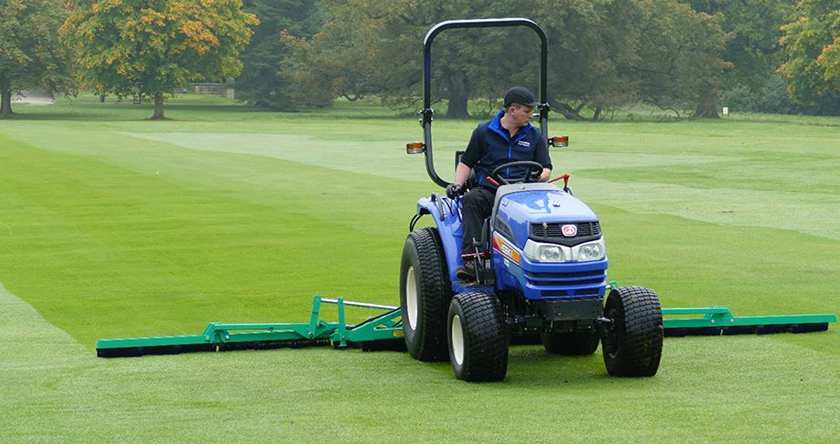
Worm casts are also easily dispersed by brushing, and with modern brushing equipment such as the GreenTek Maxi-Brush having working widths in excess of 5 metres, it is possible to brush whole golf courses or multiple sports pitches on a daily basis. The smallest of modern lightweight compact tractors have the capacity to operate these wide brushes, ensuring that turf wear through regular use is minimised.
Despite the understandable concern each time the banning of another chemicals is announced, greenkeepers and groundsmen are still managing to find innovative ways to continue to maintain healthy sports turf.