Elevate Leadership: Workplace safety essentials-How to create a zero-harm mindset
Welcome to the ‘Elevate’ series of articles based on the teachings delivered in the ‘Elevate’ leadership and management programme. A curated collection of articles designed to support your growth as a confident, reflective and effective leader. Whether you’re stepping into a management role for the first time or looking to sharpen your leadership toolkit, this series offers practical insights, real-world strategies and thought-provoking content to help you thrive.
What does risk mean?
During the training session, we took a closer look at what “risk” truly means within the context of sports turf management and day‑to‑day operations. We examined the wide range of hazards that sports turf maintenance teams regularly encounter, from machinery and equipment use to environmental conditions and manual handling.
As we explored these risks, we also uncovered some stark and concerning statistics about workplace injuries and fatalities across the UK. These figures highlight a persistent and serious issue. When health and safety practices are neglected or underestimated the consequences can be severe. This includes not only the physical harm to individuals but also the wider operational, legal and reputational impacts on organisations.
The session reinforced a clear message: effective risk assessment and a strong safety culture are not optional extras, they are essential foundations for protecting staff, maintaining high standards of course presentation and ensuring that everyone goes home safe at the end of the working day.
UK injury in the workplace statistics for 2025.
- Fatal Injuries: 124 workers were killed in work-related accidents in 2024/25, with the construction and agriculture sectors accounting for the majority of these fatalities.
- Non-Fatal Injuries: An estimated 680,000 non-fatal injuries were reported, with slips, trips and falls being the most common causes.
- Ill Health: 1.9 million workers reported suffering from a work-related illness, including stress, depression and musculoskeletal disorders.
- Employer-Reported Injuries: 59,219 injuries were reported under RIDDOR, indicating a significant number of workplace incidents.
Terminology explained.
Health and safety terminology can often be confusing, especially when certain key terms are used incorrectly or interchangeably. Words such as hazard, risk, likelihood, severity, and probability each have specific meanings, yet in many workplaces they are frequently misunderstood or misapplied.
During our session, we explored the precise definitions of these terms and examined how they relate to one another within the risk assessment process. We clarified that a hazard is anything with the potential to cause harm, while risk refers to the chance that harm could occur when someone is exposed to that hazard. We then looked at how likelihood ( or probability ) describes how often or how easily an incident might happen and how severity reflects the potential level of harm or injury.
Understanding these distinctions, and how they interact, is essential for carrying out meaningful and accurate risk assessments. By developing a shared and confident grasp of this terminology, teams can make better‑informed decisions, prioritise controls more effectively, and create a safer, more proactive risk management plan.
The risk matrix.
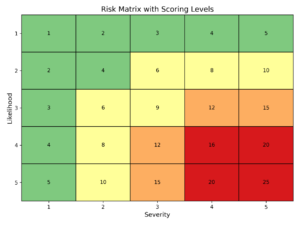
Once we understood the key terminology, we applied it to real workplace situations. Using a simple risk matrix, we could quickly assess tasks by comparing likelihood and severity. This made it easier to identify which activities carried low risk and which required stronger controls.
Risk Matrix with Numerical Scoring:
This matrix displays:
- Likelihood (vertical axis)
- Severity (horizontal axis)
- Numerical risk score (inside each cell → Likelihood × Severity)
- Colour‑coded categories:
1–5 = Low (Green) 6–10 = Medium (Yellow) 11–15 = High (Orange) 16–25 = Very High (Red)
The group then developed their own risk management plans based on their findings. We discussed what an effective risk management plan looks like, how it identifies hazards, evaluates risks, and sets out the controls needed to keep people safe. This led into our exploration of the five‑step risk assessment process, giving everyone a simple, structured journey for managing risks in everyday tasks.
5 Steps – risk assessment process.
Risk mitigation techniques.
We concluded by gaining a stronger understanding of how standard operating procedures can promote safer and more efficient working practices. We also explored the value of using a threat analysis grid to break down tasks and identify practical ways to reduce or eliminate harm in the workplace. Together, these tools support a more consistent, proactive approach to managing risk.
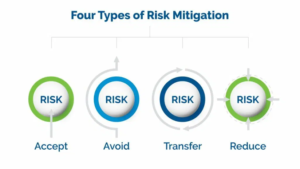
Risk mitigation involves four main approaches. We can avoid a risk by eliminating the task or hazard entirely, so the danger no longer exists. We can transfer the risk to another party, such as through insurance or by using specialist contractors. Sometimes we simply accept the risk when it is low, well‑controlled, or unavoidable, while continuing to monitor it. Most often, we reduce the risk by putting controls in place to lower the likelihood or severity of harm. Together, these principles help create safer, more informed decision‑making in any workplace.
Elevate is more than a training programme, it’s a transformative leadership journey. Designed to foster purposeful growth, Elevate empowers you to lead with empathy, drive meaningful change and make a lasting impact in both your career and your organisation.
To register your interest or find out more, please contact p.mcgrail@myerscough.ac.uk
Executive Director / Assistant Principal – Apprenticeships, Skills & Employer Engagement.
This is your opportunity to take the next step in your career—don’t miss it!