Leatherjackets target for new Acelepryn Emergency Authorisation
A further new Emergency Authorisation (EA) for the use of the Syngenta insecticide, Acelepryn, has been reapproved to target leatherjackets for the 2020 season.
The new leatherjacket specific authorisation supplements the summer chafer grub EA announced in May.
“Two individual EA’s allow a longer window of application to target the specific pests at the most appropriate timing for each– which coincide with the pests’ egg hatch and initial larval activity,” according to ICL Technical Manager, Henry Bechelet, who applied for the Emergency Authorisation on behalf of the industry.
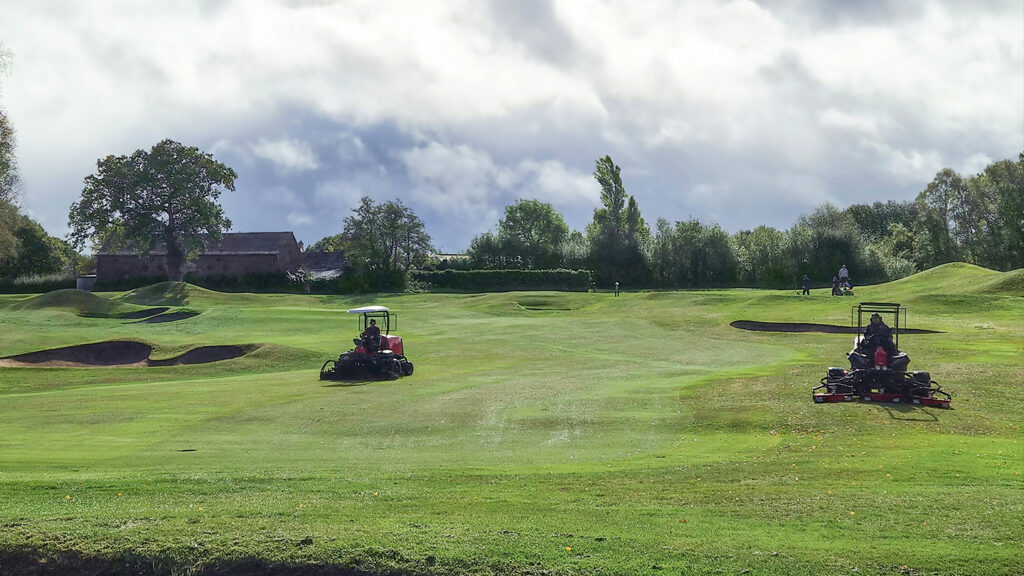
The EA permits use of Acelepryn on affected greens, tees and fairways, along with horse race courses and airfields. The treatment period for leatherjackets is up until 31 October 2020.
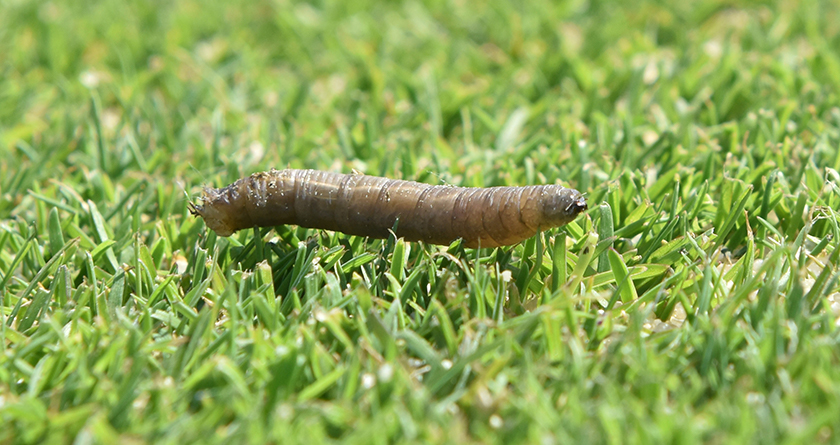
Leatherjackets cause damage to turf through feeding on roots and leaves – typically resulting in pock-marked and uneven surfaces, which can be severe in localised patches, he pointed out. Racecourses and horse gallops are especially prone to surface instability where root damage is caused by soil pests.
Furthermore, extensive damage can occur in all turf surfaces when badgers, birds and other foragers root through turf in search of leatherjackets. Flocks of birds attracted to feed on larvae are of particular concern on airfields.
Leatherjackets are the larvae of crane fly (daddy longs legs). Adults typically emerge in late July to the end of September, although hatching may be further extended into the autumn depending on weather conditions. Crane fly start to lay eggs almost immediately, depositing up to 400 eggs each in 80-100 batches.
The eggs hatch after approximately 14 days, when larvae start to feed on organic matter and roots, along with leaves on the surface around their holes. Optimum results have been seen from application targeted during peak egg laying, to target larvae soon after egg hatch.
“The extension of use to the 31 October could prove extremely useful to target later emerging leatherjackets. However, all orders must be received by ICL by 27 October, to enable necessary stewardship records and delivery,” added Mr Bechelet.
The Emergency Authorisation permits Acelepryn use in situations where there is an acknowledged instance of economic damage, or risk of bird strike on airfields, and where the product has been recommended by a BASIS qualified agronomist.
This season, for the first time, Acelepryn users will be able to submit online stewardship records of areas treated, via the ICL website.
Syngenta Technical Manager, Glenn Kirby, advised the best results have been achieved with applications when young leatherjackets, at the 1st and 2nd instar stages, are actively feeding near the soil surface.
“It’s important to apply at higher water volumes, using the white O8 XC Nozzle to target the spray through to the soil surface,” he advised. “Irrigation will help to move the spray into the target zone.”
The authorised label permits application at the rate of 0.6 litres per hectare, applied in 500-1000 l/ha water. Only one application per year is permitted on any given area.
Greenkeepers and turf managers are urged to report sightings of crane fly activity through the on-line Pest Tracker. The aim is to build a picture of pest activity across the UK and Ireland, to anticipate issues and aid application timing. Further information and pest identification guide is available on the Syngenta GreenCast website.