Preventative approach helps turf ahead of renovations
As renovation activity kicks off across the country in the coming months, greenkeepers are being warned that the stress caused by these practices could trigger outbreaks of disease in the autumn if not prevented now.
Dr Colin Mumford, technical manager at Bayer, says in the next few months greenkeepers will be top-dressing to improve playability. However, this intensive process can damage the grass plant because of the abrasive nature of the sand used in the process.
“This activity puts the plant under a high level of stress, leaving it susceptible to disease,” he says.
“With many greenkeepers top dressing every four to six weeks during the growing period, courses can be left at risk of disease outbreaks such as Anthracnose and Microdochium Patch.
“However, protecting turf prior to top dressing by applying a preventative fungicide one week before, can help mitigate against stress during high risk periods, reducing the likelihood of a disease outbreak,” says Colin.
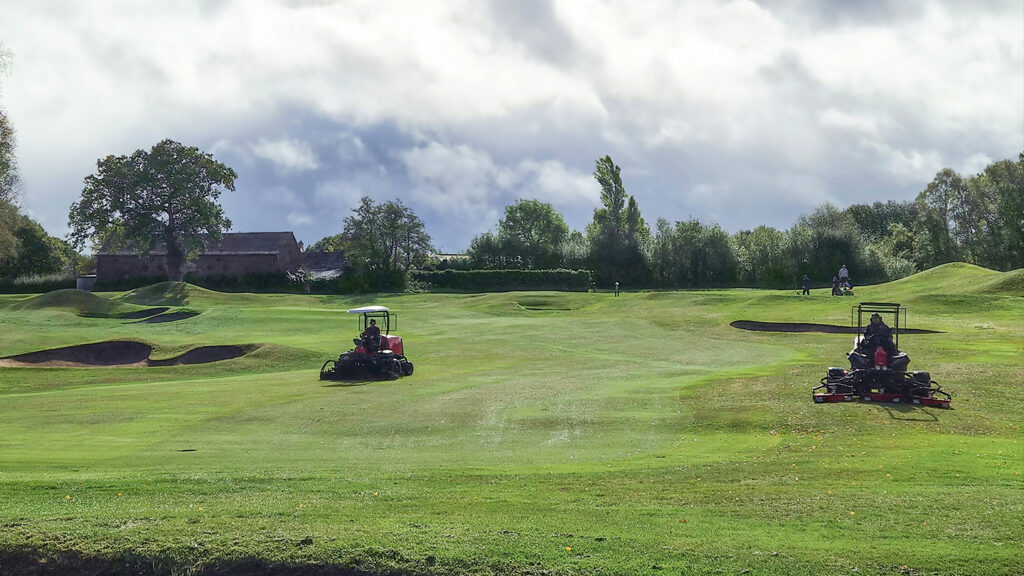
Sam Nunn, head greenkeeper at Southwold Golf Course, applied a preventative fungicide ahead of his heavy renovations to help reduce turf stress. “We undertake a big maintenance programme every year which includes top dressing, overseeding and scarifying as well as spiking once a month throughout the year. This helps improve playability as well as increasing the plant’s ability to withstand winter stresses,” says Sam.
“We usually see signs of Microdochium Patch very soon after the work is undertaken. However last year we applied a preventative fungicide a week ahead of renovations as well as just after the work and the course looked much healthier with no signs of disease,” he adds.
“Heat stress has also been an issue in the last couple of years, but I feel that taking this preventative approach has helped protect our turf from this type of stress, reducing the risk of disease later in the year.”
Sam explains that currently the heat damage isn’t as bad as last year, but greens are starting to burn off. If it doesn’t rain soon, they could be in the same position as last summer.
Colin adds that a preventative fungicide should always be used within an integrated disease management strategy to see the best results. “Targeted handheld irrigation on top of the normal routine is one way to help reduce turf stress in warm conditions. Plant nutrition can also be a key contributor to stress, as low levels of nitrogen can increase the risk of certain diseases such as Anthracnose, so it’s vital nutritional levels are adequate,” he adds.
“A preventative approach helps achieve a course that is healthy, looks visually appealing and has good playability, and managing disease is crucial in maintaining this,” concludes Colin.
www.environmentalscience.bayer.co.uk