The turf industry talks mental health
As national discussions around mental health have become louder, we thought it time to ask individuals in the turf sector to share their insight and experiences. Jemima Codrington reports on what happened when the turf industry finally started to talk about mental health…
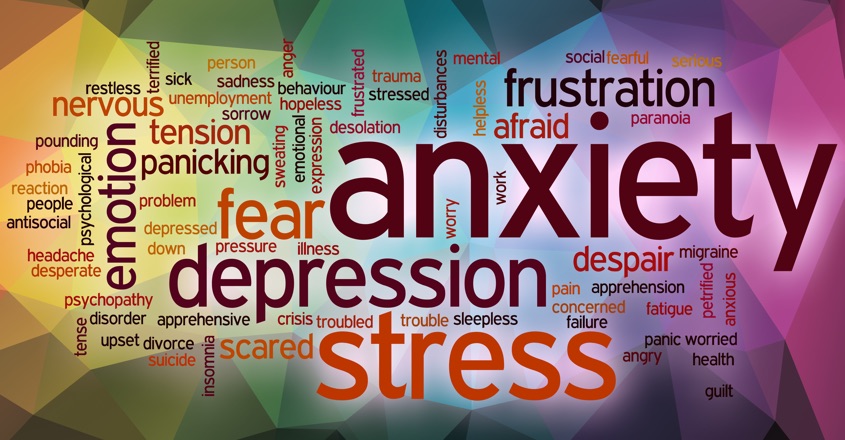
In the UK, it is estimated that one in six people in the past week experienced a common mental health problem.
Not only is this a widespread issue, but it is one that commonly affects men – and one that has become increasingly prevalent in the turf community. As this industry is one that is so prevalently male-dominated, it is becoming clear that many in the turf sector are struggling with mental health issues, and they are by no means alone. According to the ONS, 12.5 per cent of men in the UK are suffering from one of the common mental health disorder, although there is debate about whether or not this figure is accurate given the levels of diagnosis among men. In a Men’s Health Forum survey carried out in 2016, the majority of men said that they would take time off work to seek medical help for physical symptoms, yet fewer than one in five said they would do the same for anxiety (19 per cent) or feeling low (15 per cent).
So why is this the case?
Mind, the UK’s mental health charity, provides advice and support to empower anyone experiencing a mental health problem. Mind’s Workplace Wellbeing programme aims to help people understand and start talking about the costs of neglecting mental wellbeing in the workplace. “Men often see themselves as self-sufficient and in control and try to find ways of dealing with their problems independently, rather than reaching out and talking,” says Emma Mamo, Head of Workplace Wellbeing at Mind. “However, the ultimate consequence of not getting the right help can be fatal. We lose over 6,000 people through suicide every year. That’s over a hundred people a week – and three quarters of these are men.” Issues such as self-stigmatisation, or the idea that ‘real men don’t cry’, can prevent men from accessing the help that they need. Mind research has shown that almost a third of men would be embarrassed about seeking help for a mental health problem and less than a quarter of men would visit their GP if they felt down for more than two weeks, in comparison to a third of women. “Stress in small doses is not unhealthy, but different people cope with different levels of stress and although stress itself is not a mental health problem, prolonged stress can lead to or worsen mental health problems,” adds Emma. “That’s why promoting a mentally healthy environment at work needs to be on the agenda of every employer, regardless of size or sector. It’s in employers’ interests to do this, as we know those who prioritise staff mental health report their staff to be more engaged, loyal and productive, and less likely to need take time off work due to stress and poor mental health.”
In reaching out to find groundstaff and greenkeepers to discuss this subject, it quickly became clear that mental health issues were by no means isolated to the UK. Responses flooded in from all over the world, including the United States, New Zealand and Canada, where Superintendent Jason Haines works at Pender Harbour Golf Club. Clearly then, the impact of high stress and intense pressure in the workplace is not limited to the British greenkeeping community alone. “We are dealing with nature and are expected to provide something resembling consistency,” says Jason. “Sometimes living things die, and there is nothing you can do about it. So much care goes into what we are doing that when things fail, it is hard on us emotionally, and having the threat of losing our livelihood only makes things worse. It’s like a compounding of issues; when things are good, they’re really good, but if they go bad, it’s gets really, really bad.” During these bad times, Jason experiences bouts of depression brought on by what he describes as high expectations for his course, his performance, and his inability to live up to expectations. “When I’m stressed or depressed I miss things. Being chronically over-worked slows me down, forces me to rush, and bad things happen and I sometimes don’t even notice. So much of my job is planning and adjusting that plan based on the weather and other factors. When I’m stressed out and pushing my body to the extreme, I cannot effectively do that job. Taking time to sit back and think is needed, but it’s hard to do when you have no staff to help. My biggest fear is that my work-related stress will impact my family – and it does. In the summer I am always exhausted and it’s hard for me to do fun things with my wife and kids. Letting them down like this only makes me feel worse, which causes me to resent the work that is stressing me out and it spirals downhill from there.” Jason also notes that the advent of social media has greatly increased stress at work. By creating such an open platform for what is at often times criticism, social media can have a substantial negative impact on grounds and greenkeepers. Numerous clinical studies have linked the use of social media to feelings of unhappiness, jealousy, and depression, with one study in particular noting how the “share and compare” nature of platforms such as Facebook has a direct correlation to the presentation of depressive symptoms. “Social media has been extremely valuable to me, as I work in a rural area that is rather isolate, and it gives me the chance to see what everyone is doing and take the best ideas and apply them to my course,” says Jason. “ Where it gets difficult for me is seeing everyone’s perfect conditions which can leave me feeling like a failure. It’s common to edit out the bad parts when taking a photo to share on social media and this isn’t something that’s unique to the turfgrass industry. This winter, we lost half of our greens to crown hydration. This was the second time this had happened to me and I wasn’t too worried because I had experience and knew what to expect. A local superintendent also had it happen to him and was taking it very hard as it was their first time with dead greens. It wasn’t until we learned that the damage was widespread across all courses in the area – no matter what budget they had – that this person finally felt better. We take this stuff personally even when we shouldn’t, but it doesn’t help if we are faced with people who don’t understand what it takes to do what we do. The first time my greens died, I was confronted by someone who suggested that the course was being managed by some kind of idiot. I was already feeling really down on myself as it was the first time we had winter damage, and I thought it was my fault. Being told to my face that I was a failure didn’t help. I think it’s important to reach out to other superintendents when things go bad so they can help you understand why your grass is dead so that you can communicate this to the golfers and management at your club. Open transparent communication is key in difficult times; it’s natural to want to curl into a ball and shut everyone out when things go bad but I think we should do the opposite.”
Perennial is the UK’s only charity dedicated to helping people who work in horticulture when facing difficulties. Offering free and confidential support, the charity offers assistance to those dealing with a range of mental health disorders including depression, anxiety, stress as part of it’s remit. According to Sheila Thomson, Director of Services at Perennial, while the importance of recognising and talking about mental health continues to gather momentum, there is still reticence among those working in horticulture to acknowledge poor mental health and to seek help. “Despite being over 175 years old we are still hampered by low awareness among those within the industry facing difficulties,” she says. We are often contacted when someone is already at crisis point, with multiple issues affecting them – illness, injury, debt, unemployment, family breakdown – and associated mental health issues that have manifested themselves as a result. Our team is trained to recognise and deal with a whole range of issues, and can signpost and refer to other agencies if we feel additional help is required. The sooner we can start working with a client, the better and we would urge anyone who feels that things are getting too much to contact us.”
Billy* first contacted Perennial in 2010 (*names have been changed to protect identities). He had worked as a groundsman for 10 years since leaving the army, but both he and his wife were on low wages and having problems paying the bills. As a consequence they borrowed money from doorstep lenders without realising the impact of the high interest rates, and as a result were in serious debt. This was having a severe impact on Billy’s mental health, which was already in a fragile state having been discharged from the army with PTSD. Perennial’s Debt Advice Team immediately helped deal with his rent and council tax arrears. “Grants were given for a new bed, mattress and bedding for his two-year old son who had outgrown his cot,” reveals Sheila. “So that Billy could seek better paid work, a further Perennial grant paid for a new driving licence and a retraining programme was organised and funded.” Unluckily Billy’s home was badly hit by floods in 2012 and most of the family’s possessions were lost, including his car. Perennial stepped in and replaced household appliances and contacted SSAFA, the armed forces charity, which helped with grants for other essential items. Billy contacted Perennial again in 2014 shortly after a failed suicide attempt; he had been made redundant and his wife had recently given birth to their second child. Their claims for benefits had failed and they were facing bailiffs, and after conversations with Perennial’s Debt Adviser, Billy accepted the extent of his debt problem and Perennial helped him obtain a Debt Relief Order. Sadly life has continued to be very tough for Billy. His relationship broke down, which led to a major setback in his mental health. Throughout all of this his Perennial Caseworker liaised with his local mental health crisis team, helped him apply for relevant benefits and accompanied him to medical examinations. Billy is now on the road to recovery and is hoping to find suitable employment.
Ed is a turf manager working in New Zealand; even though he may be on the other side of the world, Ed notes that mental health issues are still rife amongst the turfcare industry. “In my opinion, this is because the turf industry is very similar to the farming industry in that there are few extra resources available. When preparing the turf, the user wants the best all the time – all they care about is that when they turn up, the sun is out and they are ready to use it. It is a thankless industry where you get recognised a lot from your peers but not so much the user.” Ed has noticed that another similarity between the life of groundstaff and that of farmers is the isolating nature of the job. “When I’ve had to deal with situations where employees are stressed or depressed, you notice the impact on the quality and quantity of work that is completed. We often work in isolation too – either people work by themselves or work earmuffs on to combat noise, and so they have time to be with their own thoughts. Once the earmuffs are off and you’re having a couple of beers, then you talk about the good times rather than talking about the negative. This I have noticed makes it really hard for people to ask for help.”

Speaking up sooner than later is absolutely critical, but when in the grips of a depressive bout, it can be the hardest thing to do. It is therefore vital that managers are engaged with their staff and aware of the warnings signs that could indicate an individual is suffering. “This year one of our workers had to checked into hospital by one of our managers. We were lucky that on this occasion in that the workmate in the field saw some warning signs – for example, while working, he wasn’t engaged and couldn’t even do the simplest tasks. In the end, his workmate recommended that he take a walk and come back with a clear head. When these walks became more frequent, she raised the alarm in good faith with the manager who then let the appropriate medical professionals know. This was a lucky situation where he was ok to discuss and prepared to get help.” Ed’s team have also suffered the tragic consequences of not being so lucky, when a team member took her life last year. “Publicising the fact that there is help available should be done more for the industry. This could easily be advertised the same as we do to farmers as the situations that we face are the same.”
In the UK, both industry bodies are aware of the rising problem, and do have initiatives in place to help. The IOG has a confidential service for its membership that will field calls for help, and also refer people to expert help and assistance where relevant and necessary. “Mental health issues are complex and cannot be treated on block – each person has to firstly be treated as an individual,” says, Geoff Webb, CEO of the IOG. “Analytically, it does appear to be an issue that is on the increase. The increased exposure of sport brought about by terrestrial TV to a global audience must be considered a factor, alongside the pressure and extent of sport played week in week out. You then have to consider pay and reward against risk – for example, do groundsmen get paid enough for what they do? Are the employers giving enough credence to the teams working to produce a surface?” As has been previously noted, it is in the best interest of employers to find ways to mitigate stress and provide adequate support. It is estimated that better mental health support in the workplace can save UK businesses up to £8 billion per year, but the benefits that can be gleaned from offering better support extend far beyond the financial. According to Geoff, these regular support programmes should also adopt a holistic approach. “We fear that at present it is more a reactive system than a proactive system in this regard – too often it is the case that employers only react when a person has reached crisis point. There is still some education required from employers, but likewise, it is important that any individual who may be feeling stress or pressurised can highlight this and trust their employer to take it seriously. Pride can often be a barrier but there is no shame in asking for help.”
Jim Croxton, CEO of BIGGA, believes one of the leading causes of high stress in greenkeeping specifically is the rapid rate of change occurring. “I think for anyone, change can be difficult, but perhaps especially for our members who are trying to present the most consistent product possible. The industry is facing rapid change in terms of management and customer expectations – you have some clubs who want different courses almost day by day. I think that environment of change is hugely stressful and difficult and challenging for greenkeepers.” It’s been established that communication is a key tool in the fight to broaden awareness and help those affected seek help sooner, but like Ed, Jim notes the industry can be quite solitary in nature. “Perhaps the reason stress is felt is more acutely with greenkeepers is that many who enter this industry, either consciously or subconsciously, do so because they have an aversion to communicating or don’t have a natural gift for it. In a role like greenkeeping, it’s quite a solitary profession. The only real solution of managing is stress is communicating, so it’s inherently quite difficult for a lot of the guys.” BIGGA is taking a three-pronged approach to managing mental health in the golf environment; firstly, the association is striving to educate employers about the application of stress by providing information about just what is expected of greenkeepers.
“The job of a greenkeeper is stressful – we need to provide management with more information about the changing environment, restrictions of pesticides usage, expectations from players and the fact that is all against the backdrop of a sport that’s not growing. “One thing I think employers get wrong or underestimate is how personally greenkeepers take everything. When you see guys having trouble with their greens, it’s not unlike seeing someone having relationship problems – it’s that personal. Some guys even refer to the course as ‘she’ – ‘she’s suffering a lot at the minute, she’s underwater,’ that kind of thing.” Then, there are initiatives to help members individually and as groups to realise the importance of improving communication skills. “The third thing – which I think is in many ways the hardest – is to get people talking to each other,” adds Jim. There’s also a free confidential helpline available to all members, and alongside that there is a website filled with resources. “We do have a team of regional staff – and while they are not trained staff – they are employed to support and serve the needs of our members, and they’re very keen to help in any way they can. I always marvel at how good our guys are at solving problems relating to turf when they get together, and I think increasingly we are seeing how they can help each other handle difficult situations elsewhere in the fraternity of greenkeeping.”
With thanks to Mind, Perennial, BIGGA, the IOG, and the groundstaff who volunteered their experiences for this piece. Like this story? Share and help us continue the conversation by using the hashtag #TurfTalksMentalHealth.