Turfcare tips and tricks from Edgbaston Stadium’s Gary Barwell
Gary Barwell, Head of Sports Turf at Edgbaston Stadium, offers up his turf care tips for creating and maintaining a world-class playing surface.
- The Edgbaston field is regarded as one of the finest in the UK. When it comes to maintaining a high-quality playing surface, what are your non-negotiables?
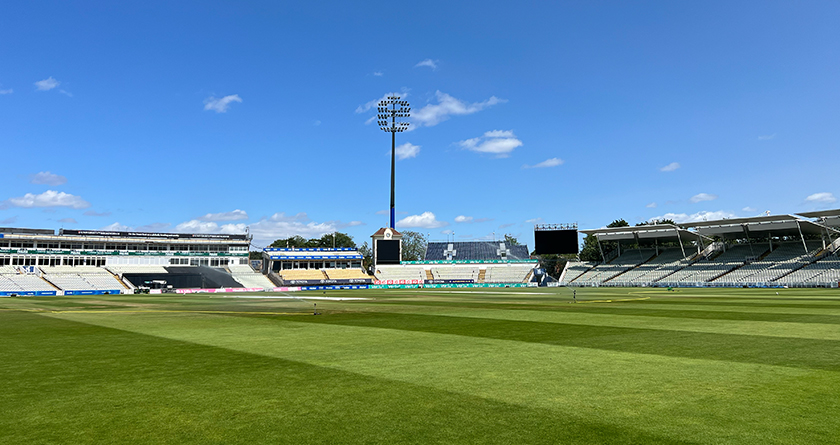
My non-negotiables for maintaining a high-performance playing surface are quite simple. Number one is presentation – whether you’re looking after a ground like Edgbaston or your local club team, everybody wants that ‘wow’ factor that makes you feel as if you’ve arrived at a major sporting venue. Take pride in your work, as the field is almost always the first thing people notice.
The other is performance – though ideally the two should go hand-in-hand. As a groundsperson, I always aim to create a quick outfield as this allows more runs to be scored, but it’s important to always keep one eye on injuries. It’s for this exact reason that we do so much data testing to constantly assess injury risk, and how this might be affected by what we’re doing with the turf.
- For groundspeople working with limited time and resources, what are some of the quicks wins they can implement?
One of the quickest wins can be found off the field, and has nothing to do with grass – it’s communication. You should have a great relationship with the captain, the coach, and the committee you work with, as they’re the ones who the surface is for at the end of the day. If you empathise with the people who are playing on the field, you’ll get a better idea of their needs, and they’ll empathise with you right back, allowing you to do your job more effectively.
- This year’s weather has thrown up some major challenges for groundcare. What’s the best way to manage the current climate?
Managing the climate is one of the trickiest things that grounds managers in this country have to deal with at present. However, we must accept that it’s here to stay, so we have to find ways of dealing with it. Use your experience, know the ground you’re working with, but keep your mind open to new ways of doing things.
For instance, one of the things that we’re experimenting with at the moment is watering from the base of the plant, and not always putting water on in the day. It’s about sticking to old ideas, but trying new techniques that help achieve the same results with less resources.
- What are some of the most common mistakes you see in groundcare?
It’s less related to groundcare directly, but one of the most common mistakes that I see is setting the wrong expectation for your field from the outset. Lots of groundsmen are expected to deliver the same quality field that I deliver daily. However, the hard truth is that I have a much bigger budget, more staff, and more time, as this is my full-time job. If you’re looking after a small ground, you should set realistic expectations with the club about what the resources you have at hand will allow you to deliver.
- If you inherited a poor-quality surface tomorrow, what would your first action be?
My first step would be to try and diagnose what’s wrong with it. If the ground you’re looking after is known to be poor – you need to ask: why is it poor?
At Edgbaston, we’ve never had to re-lay a pitch or dig anything up. We’ve just changed our approach, one process at a time, to slowly create a better field. You should identify a small thing that you can change, see if it works, and go from there. Each groundsman should aim to leave the field in a slightly better condition than the last.
- What’s the most important piece of machinery in your toolkit, and why?
There are a few pieces that spring to mind here. We use the Dennis ES-36 to cut the outfield – it’s really nice to drive, very simple to use, and in my opinion it’s the best mower of that type on the market. The cut is immaculate.
The switch to battery tech has been a revelation for the team. You’ll see them out there with headphones on instead of ear defenders, and there’s far less hand-arm vibrations. When you’re cutting the outfield for two to four hours a day, these things really make all the difference.
The Dennis ES-760s we use to cut the square are also nice and easy to use. Because the display is exactly the same on all the machines, set-up and use is quite easy. I think I could teach an apprentice how to use a Dennis in under a week – which then means they’re able to use the entire fleet because of how they’re set up.
- Are there any mowing tricks that can help increase presentation?
First and foremost, always have something on the collection box that you’re aiming for, and stick with it. With the Dennis, there’s a speed setting, so set your comfortable speed and height of handlebars, and go from there.
When we’re cutting the outfield, we also insert these things called ‘carrots’ in the turf, which serve as a visual guide of what to aim for. If we start to lose the stripes, we’ll mark them with slalom poles, or we’ll run a string down there and correct it. At the end of the day though, nothing beats experience and concentration!
- How do you determine the perfect mowing height throughout the season, and how often should grounds teams review and adjust mowing practices?
I’ve got a bit of an unwritten code not to take more than a few millimetres off at a time, so I don’t damage the plant. While this sounds quite hard to do, the Dennis machines make it really easy. You can change the cut height and cuts per minute from the electronic display, and off you go. It doesn’t matter which Dennis machine you’re using, you’ll get the same results every time.
- Finally, is there a ‘groundcare hack’ you’ve discovered that isn’t taught when you’re starting out?
My groundcare hack is about breaking your day up to make it more enjoyable. Instead of two hours of rolling solidly on your own, jump off after half an hour and get on your Dennis. Do two or three stripes, and then go back and do another half an hour of rolling, and so on. Try it, and I think you’ll find you’ll have a much more enjoyable day!
Find out more about the Dennis E-Series.